
 Back to projects
Kasa.
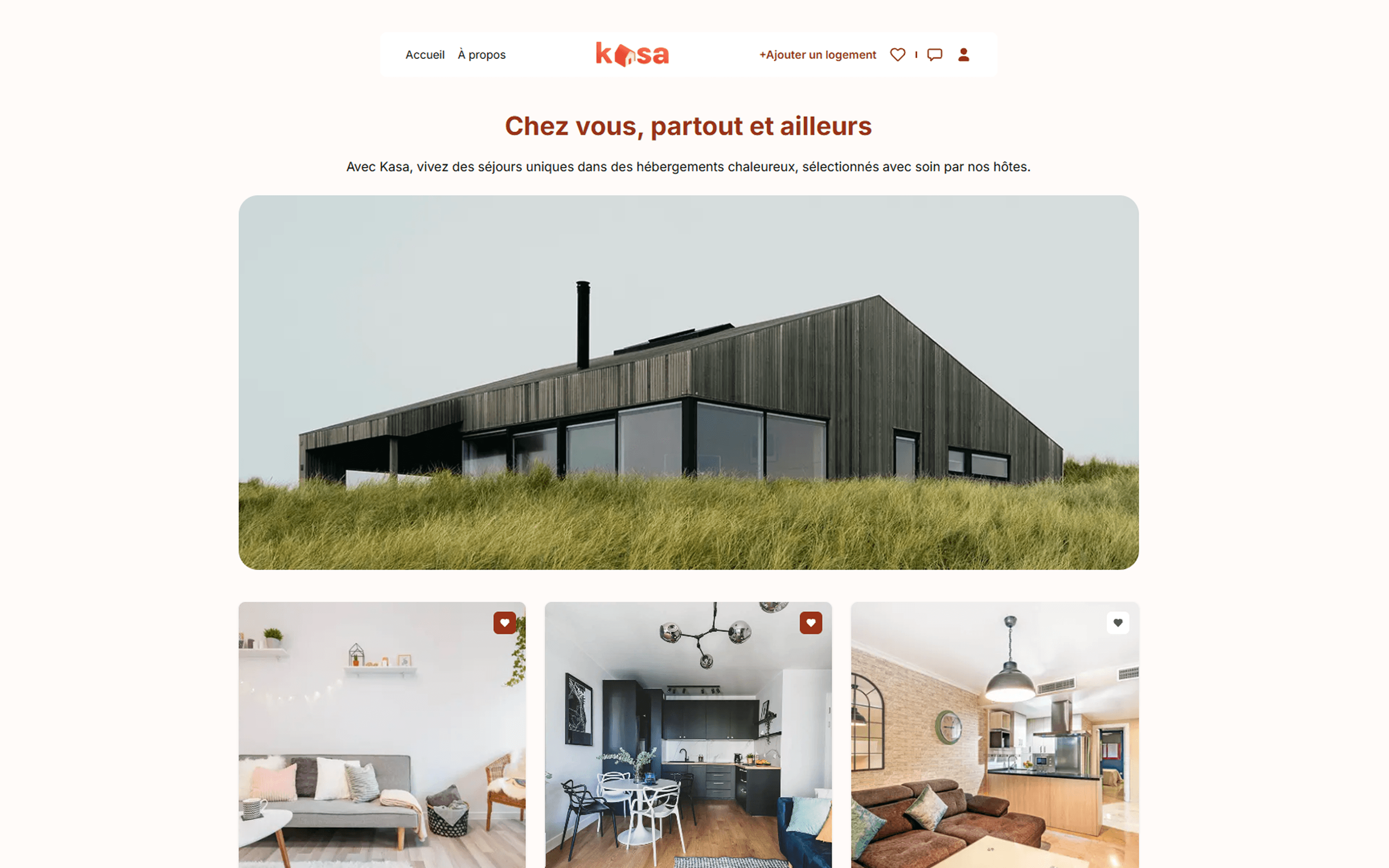
Next.js rental application to browse and publish housing listings, keep favorites, talk to owners and manage an account, through a responsive interface connected to an Express API. A GitHub Actions CI runs lint, tests and builds on every push.
 View site


Context
Project built as part of the OpenClassrooms program, then taken further than its original scope. The goal was to build a complete rental application from mockups, integrating an existing Express API before adapting it to the feature and deployment needs.
Stack
Next.js App RouterTypeScriptReactTailwind CSSExpressSQLiteJWTVitest / RTLVercelRailwayGitHub Actions
Technical choices
- Next.js App Router with Server Components for server-side rendering, and client components only where interaction is required
- Server Actions to centralize sensitive writes without exposing the Express API directly to the browser
- Express API with JWT authentication and client, owner and admin roles
- SQLite to persist accounts, properties, messages and business data
- Upload handling for property photos and user avatars
- Context API and localStorage to manage favorites without adding backend complexity
- Vitest and React Testing Library to cover critical behaviors and components
- Vercel for the Next.js frontend and Railway with a persistent volume for the backend, SQLite and uploads
Features
 JWT authentication
 Listing creation
 Messaging
 Favorites
 Profile management
 Image uploads
 SEO & accessibility
 Responsive design
What this project demonstrates
- Building a full-stack Next.js application connected to an Express API
- Handling authentication, roles and protected routes
- Designing Server Actions to secure exchanges with the backend
- Implementing user-to-user messaging
- Complete handling of forms, validation and file uploads
- Building accessible, responsive interfaces from provided mockups
- Setting up automated tests on critical flows and logic
- Deploying a separate frontend and backend architecture with persistent storage
Current limitations
- Backend initially provided, then extended for the needs of the project and its deployment
- SQLite suited to the demo and scope of this project rather than to heavy production load
- Uploads go through Server Actions and remain subject to Vercel’s 4.5 MB request body limit
